

Table of Contents
- What Makes a Courier Right for Construction Materials
- Comparing Construction Materials Delivery Service Options
- How a Building Materials Courier Handles Heavy and Awkward Loads
- When Same-Day Construction Delivery Makes Sense
- Choosing a Construction Site Delivery Service
- Preparing Materials and Information Before Collection
- Conclusion
- Frequently Asked Questions
Last Updated: 9 October 2026
What Makes a Courier Right for Construction Materials
Finding the best courier services for construction materials comes down to three things: the right vehicle, the right handling equipment, and the right insurance cover. Get any of those wrong and a pallet of tiles or a length of steel arrives damaged, late, or not at all.
This guide from Cambridge Courier Services Ltd breaks down what actually separates a courier that can move building materials from one that simply says it can. We work with production managers and site teams, and the same problems come up again and again.
The stakes are higher than most people expect. A delayed beam or a cracked sheet of glazing doesn’t just cost the price of the item. It stalls a crew, pushes back a programme, and can trigger penalty clauses on a fixed-date contract.
Below, we’ll show you exactly how to judge a construction materials delivery service, what to ask before you book, and where most bookings go wrong.
Vehicle Type and Load Handling
Vehicle choice decides what a courier can physically carry. A standard panel van suits boxed fixings, tools, and bagged goods up to around a tonne. Anything longer than the van’s internal load length, or heavier than its gross vehicle weight allows, needs a different vehicle entirely.
For awkward loads, the equipment matters as much as the vehicle:
- Tail lifts for palletised bricks, blocks, and bagged cement
- Ratchet straps and load bars to stop movement in transit
- Trolleys and pallet trucks for kerbside-to-site movement
- Open or curtain-side vehicles for timber and sheet materials that won’t fit through rear doors
A courier who turns up without the right kit will either refuse the load or, worse, take it anyway and let it shift.
Insurance, Certification and Accountability
Goods-in-transit cover is the line most buyers forget to check until a claim is refused. Standard cover often excludes building materials, high-value plant, or anything classed as hazardous. Ask for the cover level in writing before the collection, not after.
Certification signals a courier runs to a documented process. Cambridge Courier Services Ltd holds ISO9001 certification and is a member of the National Courier & Despatch Association, which means handling and record-keeping are audited rather than assumed.
Accountability matters too. You want a named contact, a paper trail for every consignment, and a clear claims process if something goes wrong.
Comparing Construction Materials Delivery Service Options
There are three broad options, and each suits a different job. Picking the wrong one is the most common and most expensive mistake we see.
Service Type | Best For | Typical Lead Time | Handling Capability |
|---|---|---|---|
Same-day express | Urgent parts, one-off critical items | Within hours | Dedicated vehicle, direct route |
Same-day economy | Less urgent loads, flexible deadlines | Same day, off-peak | Shared or scheduled vehicle |
Regular contract runs | Recurring site deliveries | Fixed schedule | Dedicated route, consistent driver |
Service Types and What They Suit
Same-day express suits the genuine emergency: a part that’s stopped a production line, a specialist fixing that’s holding up a handover. A dedicated vehicle runs direct, so nothing is consolidated or delayed.
Same-day economy works when the load is needed today but not within the hour. The trade-off is a slightly wider delivery window in return for a lower cost.
Regular contract runs are the answer for sites that need materials every week. A fixed schedule means fewer access problems and less explaining at the gate.
How a Building Materials Courier Handles Heavy and Awkward Loads
Heavy and awkward loads are where a building materials courier earns their fee. The difference between a smooth delivery and a damaged one is almost always in the preparation, not the driving.
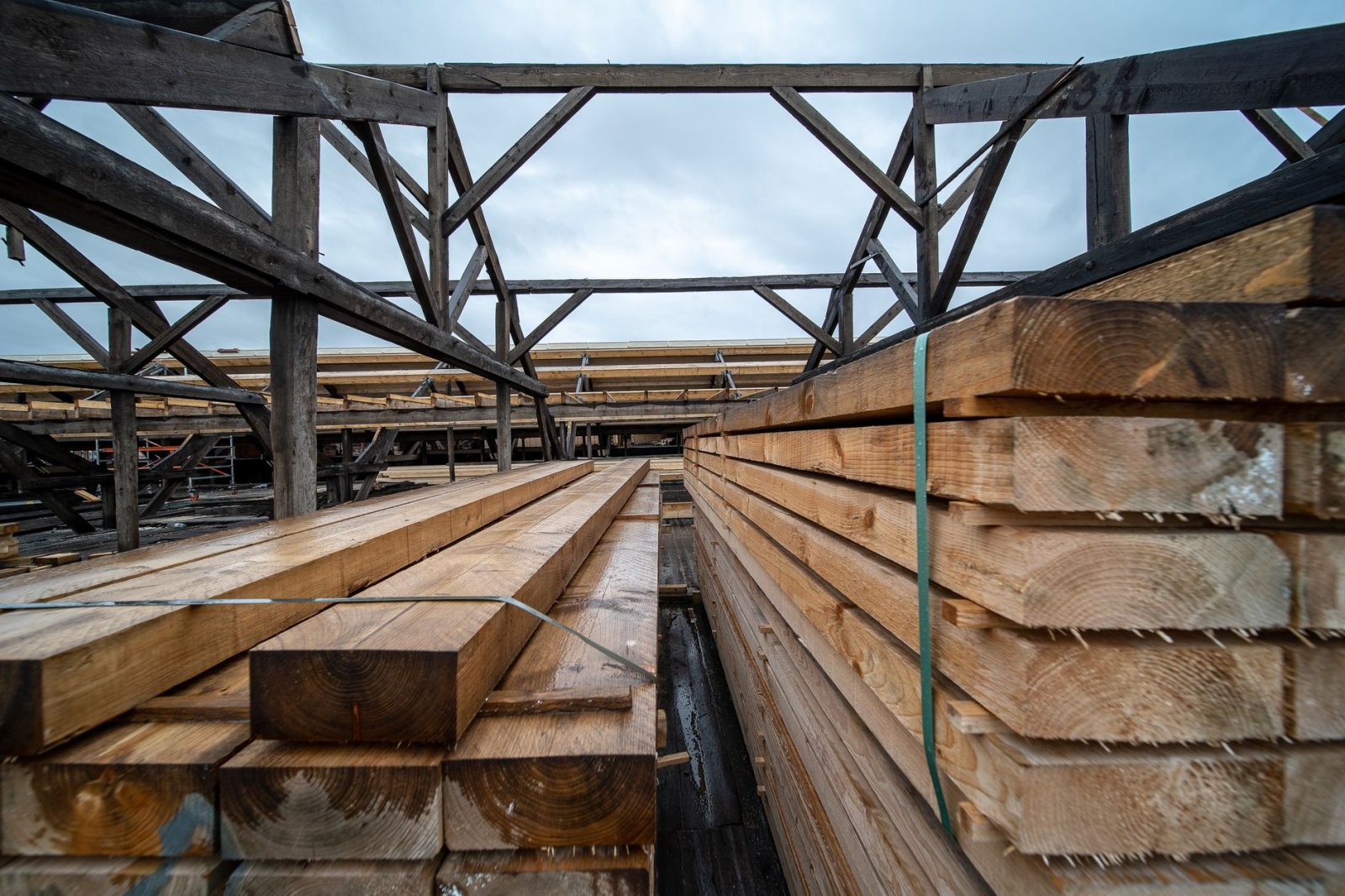
Length is the first constraint. Timber, pipework, and metal sections often exceed a standard van’s internal load space, so they need an open or curtain-side vehicle. Weight is the second. A pallet of blocks can push a van close to its legal limit, and overloading is both unsafe and illegal.
Secure restraint is non-negotiable. Straps should be rated for the load, not just present. Anything that can roll, slide, or topple needs to be braced before the vehicle moves.
When Same-Day Construction Delivery Makes Sense
Same-day construction delivery makes sense when the cost of delay outweighs the cost of the courier. That’s a straightforward calculation, and it’s usually obvious once you run it.
It’s worth it when:
- A critical part has failed and a crew is standing idle
- A specialist item is the only thing holding up a handover
- A client inspection or sign-off depends on materials arriving today
- A production line is down and waiting on a component
It rarely makes sense for routine replenishment. If you can plan the delivery a day or two ahead, a scheduled run will usually cost less and cause fewer access headaches.
The judgement call is simple: compare the courier cost against the cost of a stalled crew for a day. For most sites, the answer is clear.
Choosing a Construction Site Delivery Service
Choosing a construction site delivery service is about access and coordination as much as transport. The best vehicle in the world is useless if it can’t get through the gate.
Site Access, Timing and Coordination
Site access is the single biggest cause of failed deliveries. Narrow entrances, height restrictions, weight limits on access roads, and permit-only windows all catch couriers out.
Before booking, confirm:
- Delivery address, including the correct site entrance, not the office address
- Access restrictions: height barriers, weight limits, narrow lanes
- Whether a banksman or sign-off is required on arrival
- The delivery window the site can actually accept
- Who signs for the goods and where they go
Timing matters for another reason. Deliveries that arrive during peak site traffic or a concrete pour cause disruption. A short call ahead of the booking can prevent a wasted journey.
Preparing Materials and Information Before Collection
Preparation before collection prevents most delivery problems. A few minutes spent on the details saves hours of sorting out a failed or damaged delivery.
What to have ready:
- Accurate dimensions and weights for every item, including packaging
- Loading requirements: does the item need a tail lift, or can it be hand-loaded?
- Collection and delivery addresses with access notes for both ends
- Contact names and numbers for the person handing over and the person receiving
- Any special handling notes: fragile, keep dry, this way up, do not stack
For fragile or high-value items, say so at booking. It changes the vehicle, the restraint, and the handling on arrival. A courier who knows a load is fragile before they arrive will treat it differently from one who finds out at the kerb.
If you’re moving materials regularly between sites, a contract run removes most of this admin. We set up fixed schedules with the same driver, so the access details and handling requirements are known in advance rather than repeated at every booking.
Conclusion
Getting construction materials to site on time comes down to matching the vehicle, the handling, and the insurance to the load, then coordinating access before the vehicle arrives. The couriers who get this right are the ones who ask the right questions at booking rather than at the gate.
If your operation depends on materials arriving when you need them, it’s worth building a relationship with a courier who understands site constraints and plans around them. Cambridge Courier Services Ltd provides nationwide same-day delivery, contract runs, and dedicated handling for bulky or awkward consignments, backed by ISO9001 certification and NCDA membership. Our team works with production managers and site teams to keep critical deliveries moving without the guesswork.
Frequently Asked Questions
What should I look for in a courier for construction materials?
Check vehicle size and load capacity first, since standard vans cannot take long timber or palletised loads. Ask about goods-in-transit insurance limits, whether drivers are trained in manual handling, and whether the courier can confirm collection and delivery times in writing. Certification such as ISO9001 and membership of a trade body like the National Courier & Despatch Association (NCDA) gives you a way to judge whether a provider meets consistent service standards. Also confirm how they handle restricted site access and who answers the phone when something goes wrong.
Can a courier deliver bulky building materials to a construction site?
Yes, provided the courier operates the right vehicle for the load. Long items such as timber, pipework and profiles need a van with sufficient internal length or an open-bed option, while heavier palletised goods need tail-lift equipment. When booking, give exact dimensions and weights rather than a rough description, because this determines which vehicle is sent. A construction materials delivery service used to site work will also ask about access restrictions, gate widths and whether a forklift is available on arrival.
How should construction materials be prepared for courier collection?
Wrap and label everything clearly before the van arrives. Loose fixings, sealants and small components should be boxed or bagged so nothing rolls around in transit. Long items should be bundled and strapped, with any sharp edges protected. Write the delivery address, site contact name and a contact number on each item or bundle, not just on one label. If materials are fragile or easily marked, say so when booking so the driver can load and secure them appropriately. This preparation reduces damage claims and speeds up unloading on site.
Can couriers deliver materials to sites with restricted access?
Many can, but the site must be described accurately at the booking stage. Tell the courier about narrow lanes, weight limits on access roads, height barriers, permit-to-work requirements and any time windows when deliveries are allowed. If a large vehicle cannot reach the unloading point, a smaller van or a transfer arrangement may be needed. Providing a site contact who can meet the driver at the gate avoids failed deliveries, and confirming any inductions or PPE requirements in advance keeps the drop on schedule.


